
Vorträge
Programm Frühling 2026
Prof. Dr. Yann Tristant
KU Leuven
Donnerstag, den 19. März 2026 um 18:15 Uhr
Kollegienhaus Hörsaal 114
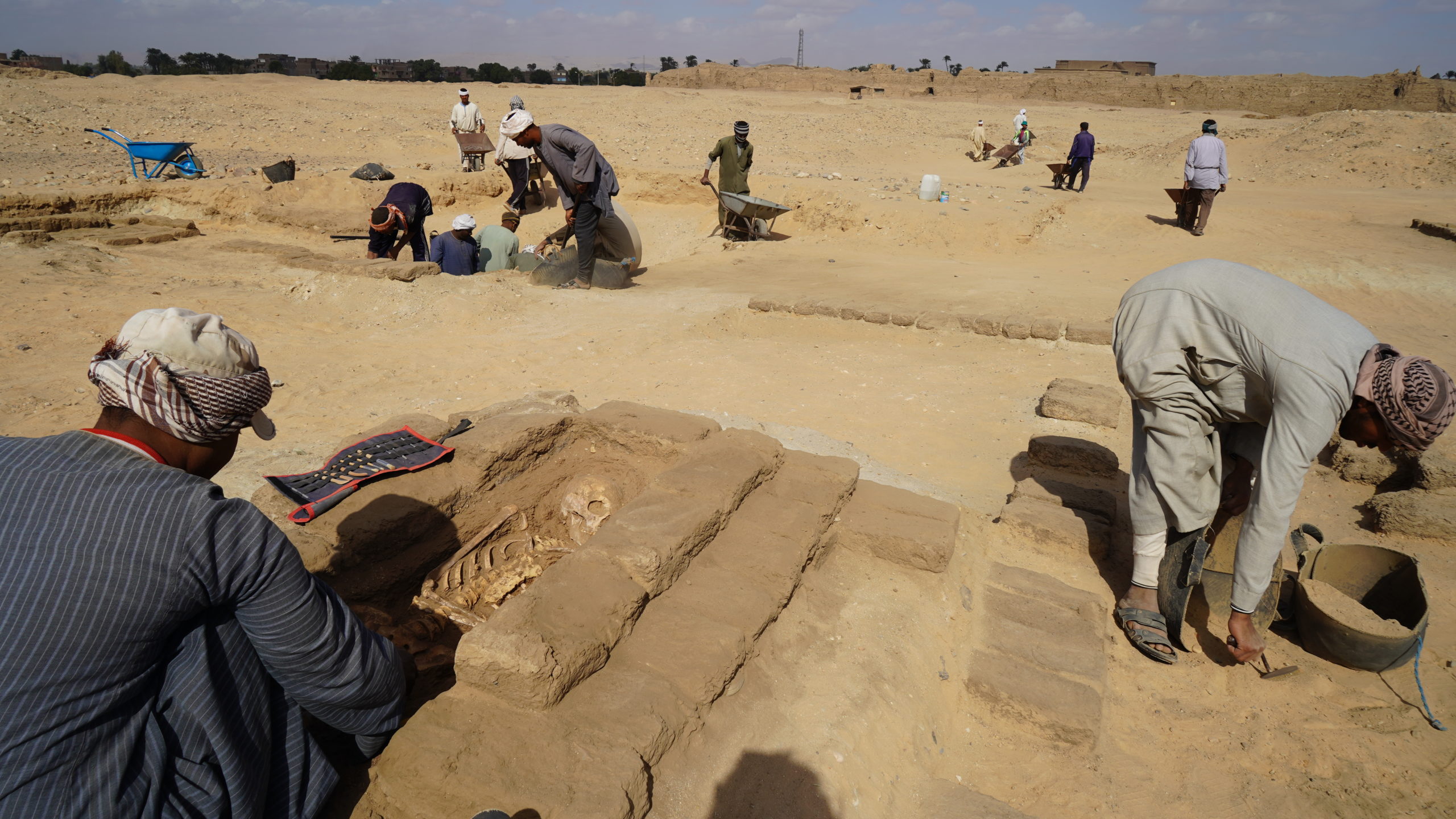
Excavation of a Middle Kingdom tomb at Dendara
© Ifao, mission archéologique de Dendara – Yann Tristant
The Pharaonic Necropolis of Dendara: Rethinking Egypt’s Mortuary Landscape
Erfahren Sie mehr
On the western bank of the Nile, 600 km south of Cairo, the site of Dendara is renowned for its temple dedicated to Hathor, the goddess of love, joy, and beauty, often depicted with cow-like features. Yet beyond this Ptolemaic religious complex, stretching south into the desert, lies a vast pharaonic necropolis covering over 90 hectares. For nearly 3,000 years, this monumental cemetery served as the final resting place for the inhabitants of the ancient city, offering a unique window into their lives and beliefs.
Since 2014, a groundbreaking research project has united the Institut français d’archéologie orientale (Ifao, Egypt) with KU Leuven (Belgium). This collaborative effort aims to study the necropolis in its entirety: mapping its spatial and chronological development, analysing the variety of monuments and funerary practices, and uncovering the social transformations that shaped Dendara’s community from the dawn of the pharaonic era through the Graeco-Roman period.
Preliminary findings from this archaeological program are already shedding new light on the origins of Dendara and the socio-cultural evolution of its people. By exploring this monumental funerary landscape, researchers are revealing a lesser-known dimension of the Egyptian provincial town.
Dr. Cyprian H.W. Fong
Universität Basel
Donnerstag, den 30. April 2026 um 18:15 Uhr
Kollegienhaus Hörsaal 114
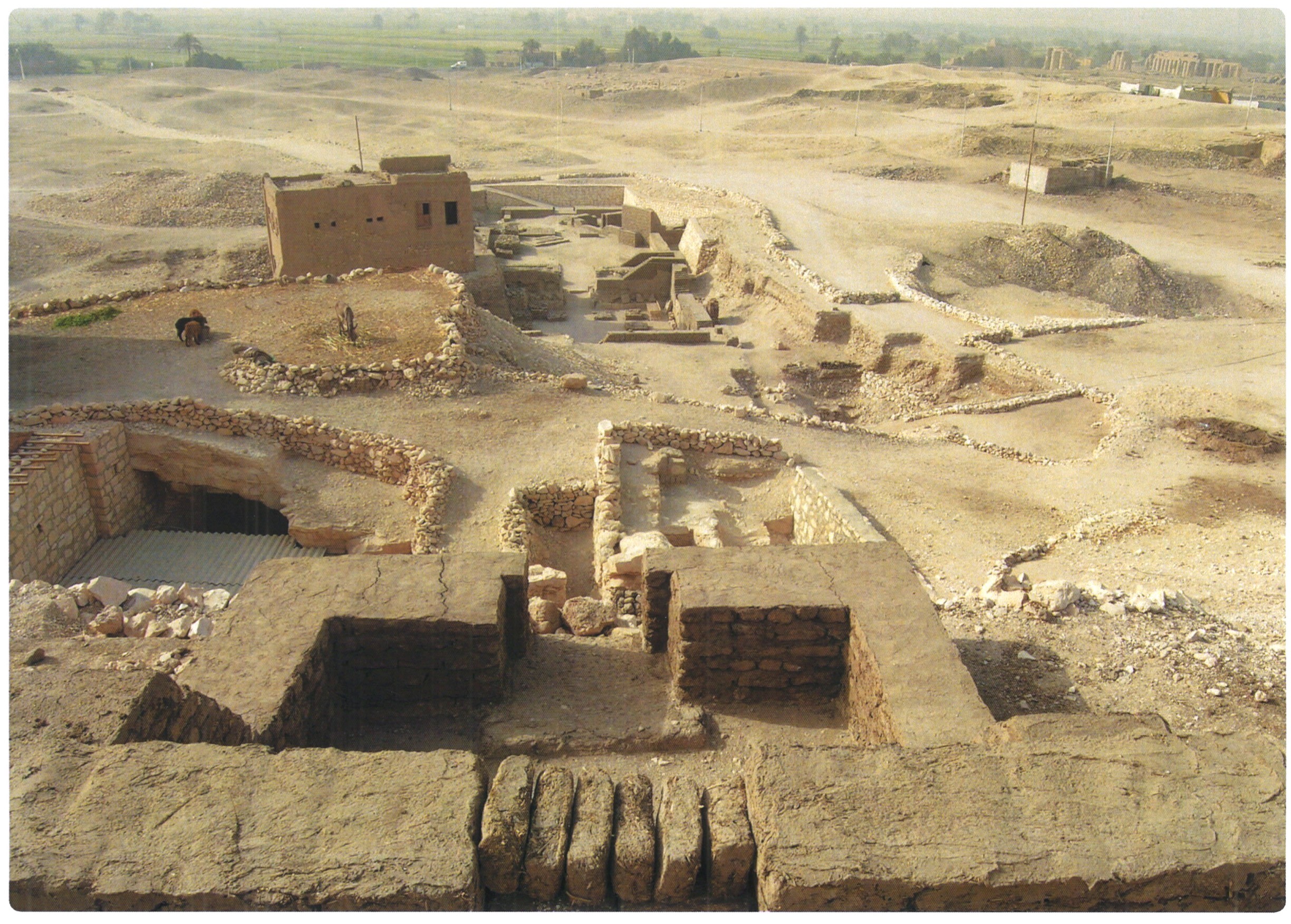
View of the site from the pyramid chapel of Theban tomb TT 32
© Schreiber, The Mortuary Monument of Djehutymes II, 2008, photo plate XXV(A)
Revisiting the Soter Family Funerary Assemblage: Newly Identified Materials and Their Implications
Erfahren Sie mehr
Theban Tomb TT32, originally built for the Ramesside official Djehutymose, was opened in antiquity and repeatedly reused. In the Roman Period it served as a family burial for an individual named Soter, who bore the title ‘Archon of Thebes’. The rich assemblage of funerary material, crucial for understanding Roman-period burial practices, was discovered in 1820 and subsequently dispersed among European collections without adequate excavation records. Reconstructing this family has required extensive work based on papyri and coffin inscriptions, yet this study identifies previously overlooked papyri that could belong to this assemblage. This paper presents these newly identified objects, and discusses their implications for the history of this family and for scribal practices in the production of funerary papyri in Graeco-Roman Thebes.
Für das Verzeichnis der bisher durchgeführten Vorträge, klicken Sie bitte hier